How Long Does a Fence Last in Colorado? By Material
· Buying Guide
Cedar, vinyl, and chain link age differently on the Front Range. Real service-life numbers by material, plus when a Colorado fence is worth fixing vs replacing.
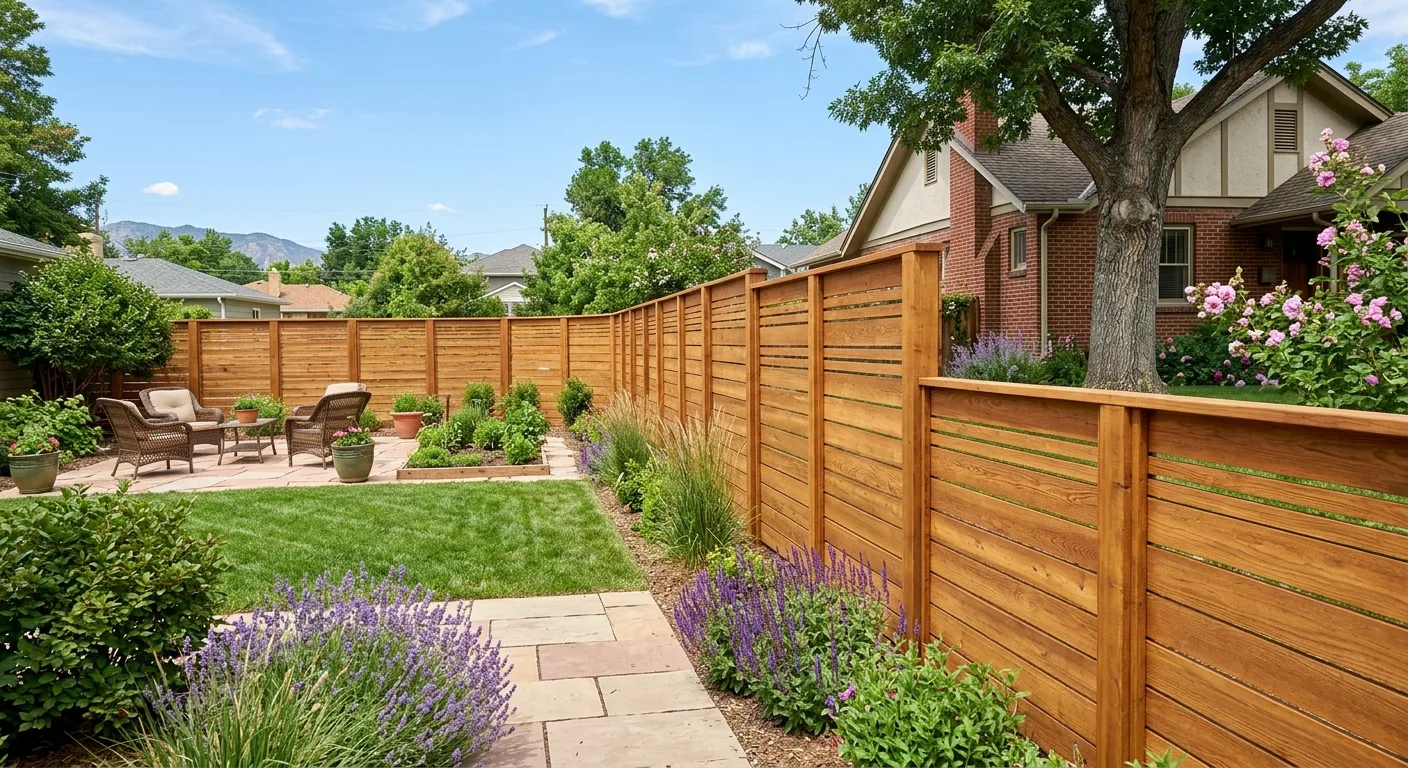
<p>Every "how long does a fence last" chart online gives you one number per material and calls it done. Cedar: 15 years. Vinyl: 30. Chain link: 20. Those figures were averaged across climates that have nothing to do with the Front Range, and they're the reason homeowners here get blindsided when a fence they were told would last two decades is leaning by year four. A fence in the Denver metro isn't fighting humidity or termites. It's fighting UV at 5,280 feet, roughly 150 freeze-thaw cycles a year, expansive clay that heaves, spring hail, and the summer microbursts that flatten whole sections in one afternoon. Match the material and the install to those five forces and you get the long number. Miss them and no material saves you.</p>
<p>We're J.A's Privacy and Perimeter, owned by Julian Lopez, and we've built and repaired fences across Denver, Aurora, Lakewood, Thornton, Arvada, and Westminster for 15+ years and 500+ completed projects. After that many resets and replacements, I've stopped quoting national averages. Here's the real service life we see by material on the Front Range, what stretches it, and the honest line on when a leaning or storm-hit fence is worth fixing instead of replacing.</p>
<img src="https://ktunuekthpaqbvijarql.supabase.co/storage/v1/object/public/hero-images/997cde1b-f695-4adf-a43b-a034f0804cba/cost-to-install-a-fence.webp" alt="Fence line built to Front Range service-life standards on deep concrete footings in Denver clay" width="1200" height="800" loading="lazy" class="my-6 w-full rounded-lg" />
<h2>How Long Does a Wood Fence Last in Colorado?</h2>
<p>A cedar fence built right lasts 15 to 20 years on the Front Range before major structural work, and the two things that decide where you land in that range are the grade of the wood and how often you re-stain it. Pressure-treated pine in the same yard often fails in 5 to 7 years. The gap isn't luck. It's material and maintenance.</p>
<p>The cedar we build is #1 Grade Western Red Cedar with tight knots and no pith, because the soft pith core is what twists, checks, and splits as boards dry out in Colorado's low-humidity air. Across our metro installs, the #1 grade produces roughly 60% fewer warranty callbacks over 5 years than the #2 grade most yards stock by default, since fewer boards fail early on a hot western exposure. Grade buys you years.</p>
<aside class="my-6 rounded-md border border-border bg-card p-4 text-sm">Front Range fact: UV at Denver's 5,280 feet runs 20 to 25 percent stronger than at sea level. That's why the re-stain cadence here is every two to three years for cedar, not the five-to-seven-year interval out-of-state guides quote. Miss a cycle and the wood grays from UV oxidation, but it doesn't fail structurally.</aside>
<p>Here's the piece the charts leave out: on cedar, the posts outlast the pickets, and that's what keeps wood cost-effective for two decades. Individual boards and rails are replaceable. When a hail-split picket or a wind-loosened rail goes, you swap the part, not the fence. The structural clock is really the post clock, and steel posts in concrete footings set to frost depth run the full 15 to 20 years while the cheap-pine version leans out of the ground in a third of that time.</p>
<h2>How Long Does a Vinyl Fence Last in Cold Weather?</h2>
<p>Quality vinyl outlasts every other residential material here, commonly 25 to 30 years, but that number only holds for one kind of vinyl. Cheap hollow big-box vinyl and premium aluminum-reinforced vinyl are not the same product wearing the same name, and Colorado cold is exactly where they split apart.</p>
<blockquote class="my-6 border-l-4 border-primary pl-4 italic text-foreground/85">"We've pulled failed unreinforced vinyl panels off a job in Stapleton that cracked after a single hail season. That's not a vinyl problem. That's a cheap-vinyl problem."</blockquote>
<p>Big-box vinyl is thin-walled and hollow, missing the additives that matter at altitude. Without UV inhibitors it yellows and turns brittle, then cracks at the post channels after a few high-altitude summers. Without impact modifiers it shatters on a hail strike instead of flexing. The brands we install, CertainTeed Bufftech, ActiveYards, and Ply Gem, are built the other way: aluminum-reinforced internal channels to stop sag, high-altitude UV inhibitors, and impact modifiers that keep the panel flexible down to 30 degrees below zero instead of turning brittle in a hard freeze. That flex is the whole game in a climate that swings 60 degrees in a day.</p>
<aside class="my-6 rounded-md border border-border bg-card p-4 text-sm">The warranty caveat: premium lines carry lifetime warranty options, but that warranty only holds when the fence is installed to manufacturer spec by a qualified installer. A lifetime warranty on a panel set on a heaved post is worth nothing.</aside>
<h2>How Long Does a Chain Link Fence Last in Colorado?</h2>
<p>Galvanized chain link lasts 20+ years on the Front Range, and vinyl-coated chain link adds another 5 to 10 on top of that, so 20 to 25-plus years total for the coated product. Chain link is the most weather-durable material we install, because there's no panel to crack in hail and no board to gray in UV. What ages it is rust at the joints and cut ends, and the coating is what postpones that.</p>
- Galvanized: zinc-coated steel, 20+ years before rust streaks show at the joints and cut ends. A heavier zinc class buys a few extra years of that life.
- Vinyl-coated: that same galvanized wire wrapped in PVC, which seals the exact cut ends and joints where galvanized eventually rusts. That's where the +5 to +10 years comes from.
- The altitude catch: cheap non-UV-rated PVC coating can degrade faster than the steel underneath in direct Denver sun. UV-stabilized coating is what actually delivers the long number.
<p>One honest note on chain link, because it's the material most oversold on privacy: privacy slats woven through the fabric add screening but the result still reads as chain link with slats, not a privacy fence. If a private backyard is the goal, don't spend on slats to fake it. Chain link's real strength is a long, low-maintenance service life on a property line, a dog run, or a commercial perimeter, and there it's hard to beat.</p>
<h2>When to Repair vs Replace a Fence in Colorado</h2>
<p>Once you know how long each material should last, the real money question is what to do when yours is leaning, storm-hit, or aging. The honest framework isn't about the fence's age. It's about which part failed and why. On the Front Range, most fences we're called to don't need replacing at all, and I say that as someone who makes more on a replacement than a repair.</p>
<p>The dividing line is the posts. If the posts are structurally sound and holding plumb, almost everything above them is a repair, not a teardown: a hail-split picket, a wind-loosened rail, a sagging gate, a section knocked loose by a microburst. Those are the storm drivers we see most, and a fence with good posts and localized damage is a part swap, not a new fence. We handle the storm cases on a 24 to 48 hour response in normal weeks, with post-storm triage based on safety, and prepare the itemized photo reports Colorado adjusters expect for an insurance claim.</p>
<aside class="my-6 rounded-md border border-border bg-card p-4 text-sm">The honest test: if a leaning post rocks as a unit with its concrete plug, it's a heave-and-drainage reset, not a replacement. If it wobbles at the soil line and a probe sinks in, that's ground-line rot, and rot is the one failure a reset can't fix. Call <a href="tel:+17206096094">(720) 609-6094 and we'll walk the line and tell you which one you've got.</aside>
<h3>When Replacement Is Genuinely the Right Call</h3>
<p>Replacement earns its keep in three specific situations, and none of them is simply "the fence is old." First, when the posts are rotted through at grade, because a fence is only as sound as what holds it up. Second, when the original run was set so shallow across the whole line that resetting posts one at a time becomes an endless chore, common on builder-grade fences that never reached the roughly 36-inch frost line in expansive clay. Third, when a section rebuild would cost nearly as much as new, which happens once hail and wind have worked over enough of the run. Past that point, a full replacement stops throwing good money after bad. Want a straight read on which side of that line your fence is on? Request a free on-site estimate and Julian will read the soil and the damage in person.</p>
<h2>What Makes Any Fence Last Longer Here</h2>
<p>The material sets the ceiling on service life. The install decides whether you ever reach it. Every long-lasting fence we've built in the metro shares the same foundation regardless of what's on top, because Denver's clay and 36-inch frost depth punish shortcuts on every material equally.</p>
- Posts set to frost depth. A minimum of 36 inches, 42 in heavy clay zones like Wash Park and Capitol Hill, so seasonal clay heave can't lift them.
- A gravel-and-concrete footing. Gravel at the base drains meltwater away instead of letting it freeze against the post, then concrete locks it rigid against 70 mph wind.
- A real cure window. Footings cure 24 to 48 hours before panels go up. Loading green concrete is a direct route to a leaning fence, so we don't skip it to finish a day early.
- The right grade or brand. #1 cedar, aluminum-reinforced vinyl, or UV-rated coated chain link. The cheap version of any material is the one that fails early.
<p>Get those four right and each material hits the top of its range instead of the bottom. Julian sets the posts himself and walks the finished fence with you, so there's no subcontracting layer between the person who quoted the job and the crew that built it. Call <a href="tel:+17206096094">(720) 609-6094 Monday through Friday, 7 a.m. to 6 p.m., for a free estimate on a fence built to last the long number.</p>
Frequently Asked Questions
What makes a fence last longer in Colorado?
Depth and drainage at the post, plus the right grade of material on top. On the Front Range, the fences that reach their full service life are set to frost depth, a minimum of 36 inches and 42 in heavy clay, with a gravel base under the footing so meltwater drains away instead of freezing against the post and heaving it. Denver sees roughly 150 freeze-thaw cycles a year, and each one is a chance to lift a shallow post, so depth is what neutralizes the climate's main attack on any material. On top of that foundation, the grade matters: #1 Grade Western Red Cedar rather than #2, aluminum-reinforced vinyl rather than hollow big-box, and UV-rated coated chain link rather than cheap coating. The cheap version of every material is the one that fails early. Get the footing and the grade right and cedar hits 15 to 20 years, quality vinyl 25 to 30, and coated chain link 20 to 25-plus, instead of leaning out of the ground in a third of that.
Does staining make a cedar fence last longer?
Staining protects the color and the surface, and on the Front Range you should re-stain cedar every two to three years because UV at 5,280 feet runs 20 to 25 percent stronger than at sea level, which fades a penetrating oil faster than the five-to-seven-year cadence out-of-state guides quote. Here's the honest part most people don't hear: skipping the stain doesn't cause structural failure. A cedar fence with sound posts set to frost depth still holds 15+ years of structural life whether or not you keep it stained. What you lose by skipping is the warm color, because the wood grays out from UV oxidation, and you lose the moisture and UV barrier that keeps individual boards from checking and cupping as fast. So staining extends the good-looking, low-maintenance life of the fence and slows board-level wear, while the posts and the install decide the structural life. If you want the color protection without doing the prep chemistry and moisture metering yourself, that's what our professional staining service is for. Call (720) 609-6094 and we'll walk your fence and name the exact product going on it.
Ready to find out how many years your fence has left, or how long a new one will actually last on your lot? Julian measures every job in person and gives you a straight reset-versus-replace read before anyone quotes a dollar. Call (720) 609-6094 Monday through Friday, 7 a.m. to 6 p.m., or request a free, no-obligation estimate through our contact page.