How to Fix a Leaning Fence in Colorado Clay
· How-To Guide
A leaning fence on the Front Range is almost never a fence problem. It's a footing problem. Here's what you can reset yourself and where to stop and call.
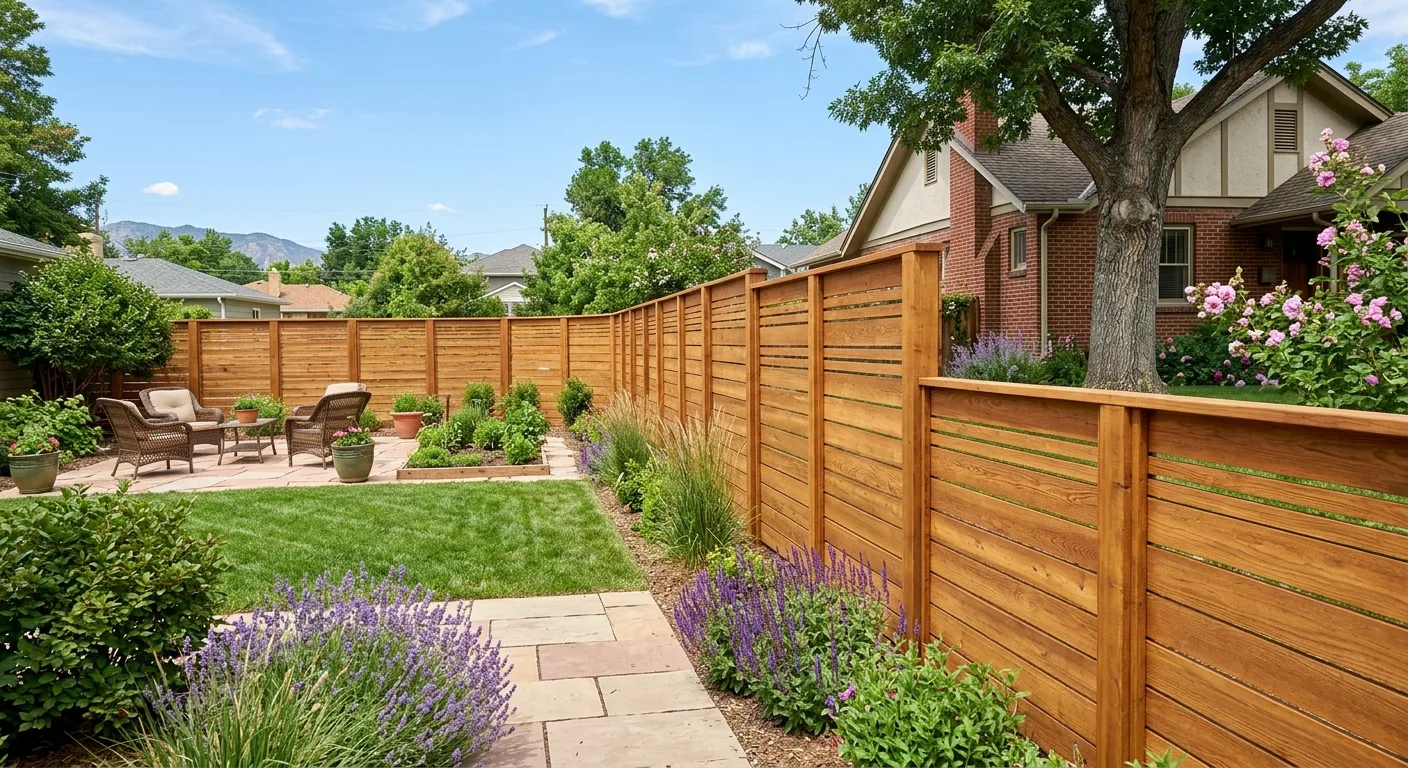
<p>Search "how to fix a leaning fence" and every guide online tells you the same three things: brace it, add a sister post, pour a bag of concrete around the base. That advice works fine in stable soil. It fails on the Front Range, and here's the part nobody says out loud: your fence isn't leaning because the fence is weak. It's leaning because the ground under the post won't hold still. Denver-metro clay swells and shrinks with every meltwater cycle, and that movement pushes shallow posts out of plumb a fraction at a time until a whole run is tilting. Fix the lean without fixing the footing and you'll be doing it again next spring.</p>
<blockquote class="my-6 border-l-4 border-primary pl-4 italic text-foreground/85">"Your fence isn't leaning because the fence is weak. It's leaning because the ground under the post won't hold still."</blockquote>
<p>I'm Julian Lopez, owner of J.A's Privacy and Perimeter. After 15+ years and 500+ completed projects setting and resetting fences across Denver, Aurora, Lakewood, Thornton, Arvada, and Westminster, I've dug out enough leaning posts to know the pattern cold. Most of them come out of the ground with a shallow, dry footing that never reached below the frost line. This guide is honest about two things: what you can genuinely fix yourself in a weekend, and the exact point where a DIY reset becomes throwing good money after bad.</p>
<img src="https://ktunuekthpaqbvijarql.supabase.co/storage/v1/object/public/hero-images/997cde1b-f695-4adf-a43b-a034f0804cba/cedar-fence.jpg" alt="Cedar privacy fence standing plumb on deep concrete footings after a post reset in Denver clay soil" width="1200" height="800" loading="lazy" class="my-6 w-full rounded-lg" />
<h2>Why Is My Fence Leaning?</h2>
<p>A fence leans for one of four reasons, and on the Front Range the first two cause the vast majority of what I get called out to look at: the post footing has heaved from freeze-thaw, or the post has rotted at the ground line. The other two are wind load on an under-set post and simple soil erosion at the base. Diagnose which one you have before you touch a shovel, because the fix is completely different for each.</p>
<aside class="my-6 rounded-md border border-border bg-card p-4 text-sm">Front Range fact: Denver averages roughly 150 freeze-thaw cycles a year. Each one is a chance for water trapped against a shallow post to freeze, expand, and nudge it a fraction out of plumb. That's why leaning fences here get worse every spring instead of holding steady.</aside>
<p>Here's how I read it in the yard. Grab the leaning post and rock it. If the whole post moves as a unit and the concrete plug rocks with it, the footing has heaved or was never set deep enough. If the post above grade is solid but wobbles right at the soil line, probe the base with a screwdriver or an awl. If it sinks in more than an eighth of an inch under light pressure, that post has ground-line rot and no amount of re-bracing saves it. Expansive bentonite clay in neighborhoods like Wash Park and Capitol Hill is the usual culprit behind the heave; it grips a shallow post and lifts it as it swells.</p>
<h2>How to Fix a Leaning Fence: The DIY Reset</h2>
<p>If your diagnosis came back as a heaved-but-sound post in reasonably stable soil, you can reset it yourself over a weekend. This is the honest DIY path, in order. Don't skip a step, and read the gate section below before you commit, because two of these steps are where people find out the job is bigger than they thought.</p>
- Remove the panels or rails from the leaning post. Unscrew or unbolt the fence sections on both sides so the post is standing alone. Trying to plumb a post with panels still hanging off it just fights you.
- Dig out the old footing. This is the step that ends most DIY resets early. If it's a proper concrete plug, you're breaking it out with a digging bar and a lot of sweat. If it crumbles out dry and shallow, that's your smoking gun for why it leaned.
- Re-dig to real depth. Go a minimum of 36 inches, and 42 inches in heavy clay. That reaches at or below the roughly 36-inch Front Range frost line so the base sits in soil that doesn't freeze and heave.
- Add a gravel base. A few inches of gravel at the bottom of the hole gives meltwater somewhere to drain instead of pooling and freezing against the post. In clay, this is not optional.
- Plumb and brace, then pour concrete. Set the post dead plumb with a level on two faces, brace it with stakes, and pour concrete around the middle. Slope the top so water sheds away.
- Let it cure before you rehang. Give the concrete a full 24 to 48 hours. Loading panels onto green concrete is exactly how a post starts leaning again.
<aside class="my-6 rounded-md border border-border bg-card p-4 text-sm">The step no one rushes: that 24-to-48-hour cure window is the difference between a reset that holds for a decade and one that tilts again by fall. If you don't have a weekend where the post can sit undisturbed, wait until you do.</aside>
<h2>How to Fix a Leaning Fence Post in Concrete</h2>
<p>When the post is set in an old concrete footing that has heaved, the reset is the same six steps above with one brutal addition: you have to get the old concrete out of the ground first. There's no shortcut. Pouring a fresh bag of concrete on top of a heaved plug just makes a heavier plug that heaves the same way, because the drainage problem underneath it never got fixed. I've dug out plenty of "repairs" where someone did exactly that, and the fence was leaning worse a year later than before they touched it.</p>
<blockquote class="my-6 border-l-4 border-primary pl-4 italic text-foreground/85">"The posts we get called to reset almost always come out of the ground with dry, shallow footings. The fence itself was fine. The install never reached below the frost line, and no bag of concrete poured on top fixes that."</blockquote>
<p>Breaking out a cured concrete footing by hand is heavy, slow work, and it's the honest reason a lot of DIY resets stall halfway. If you're staring at a plug you can't budge, or the post snaps off at grade when you try to work it loose, that's your signal to stop. We reset heaved and leaning posts to correct depth and drainage on our professional fence repair across the Denver metro visits, and we'll tell you straight whether a single reset or a section rebuild is the right call before quoting anything. Call <a href="tel:+17206096094">(720) 609-6094 and we'll walk the fence line with you.</p>
<h2>Why Fence Posts Lean in Colorado Clay</h2>
<p>This is the part the national guides get wrong, and it's the whole reason a Front Range fence needs a different playbook. Expansive bentonite clay doesn't just sit there holding a post. It swells when it takes on meltwater and shrinks as it dries, and that seasonal push-pull works a shallow post loose the way you'd wiggle a tooth. The clay runs through Capitol Hill, Wash Park, west-side Aurora, and most of central Denver. A post set to a generic one-third-of-its-length depth sits right in the active zone where that movement is strongest, so it heaves. The whole cause-and-effect is worth understanding before you plan any fix, and I laid out the depth mechanics in detail in why fence-post depth matters in Colorado clay.</p>
<img src="https://ktunuekthpaqbvijarql.supabase.co/storage/v1/object/public/hero-images/997cde1b-f695-4adf-a43b-a034f0804cba/cost-to-replace-a-fence.webp" alt="Leaning wood fence section pulled out of plumb by frost heave in Denver metro clay soil" loading="lazy" class="my-6 w-full rounded-lg" />
<p>Not every lot in the metro is clay, and the fix follows the soil. The sand-gravel substrate out toward eastern Aurora and Green Valley Ranch is far more stable and doesn't hold water against a post the way clay does, so posts there heave far less and often hold plumb for decades at a shallower depth. West-side clay is the opposite. That's why the first thing I do on any reset visit is read the soil on your specific lot, because a fix that works in Green Valley Ranch gravel is the wrong fix in Wash Park clay.</p>
<h3>When a DIY reset is the wrong call</h3>
<p>Here's the line most contractors won't put in writing, because it can talk you out of a job. Don't attempt a DIY reset, and don't spend your weekend on it, in three situations. First, if the post snaps below grade when you work it loose, the wood is compromised and needs full replacement, not a reset. Second, if you dig down and find the concrete footing itself has heaved as a solid mass, that's a break-out-and-re-pour job that's genuinely hard to do by hand. Third, if more than a couple of posts are leaning in the same run, the whole line was likely set shallow and you're better off having the run evaluated at once than resetting them one at a time all summer. In any of those three, stop and get a straight assessment. Request a free on-site estimate and I'll tell you honestly whether it's a reset, a section rebuild, or genuinely something you can still finish yourself.</p>
<h2>Can You Fix a Leaning Fence Without Replacing It?</h2>
<p>Most of the time, yes, and I say that as someone who makes money on replacements. A leaning fence with sound posts and good panels is almost always a footing fix, not a teardown. The cheapest repair is the one you don't over-buy, so I'd rather reset three posts than sell you a new fence you don't need. Replacement only earns its keep when the posts are rotted through at grade, when a section rebuild would cost nearly as much as new, or when the fence was set so shallow across the whole run that resetting posts one by one becomes an endless chore. If your fence is leaning and you want a straight read on which side of that line you're on, call <a href="tel:+17206096094">(720) 609-6094 and we'll walk it with you before anyone quotes a dollar.</p>
<h2>FAQ</h2>
<h3>Can you fix a leaning fence without replacing it?</h3>
<p>Usually, yes. A fence that's leaning because of frost heave or a shallow footing can almost always be reset without replacing the fence, as long as the posts themselves are still structurally sound and not rotted through at the ground line. The fix is to dig out the old footing, re-set the post to a minimum of 36 inches deep, or 42 inches in heavy Front Range clay, add a gravel drainage base so meltwater moves away from the post instead of freezing against it, and pour a fresh concrete footing that cures before the panels go back on. Replacement only becomes the smarter call when the post snaps off at grade, when multiple posts in the same run are all failing from a shallow original install, or when the panels themselves are too damaged to rehang. We'll give you an honest reset-versus-replace read on a repair visit rather than defaulting to whatever bills more. Call <a href="tel:+17206096094">(720) 609-6094 or request a free on-site estimate and we'll walk the fence with you.</p>
<h3>Why does my fence keep leaning after I fix it?</h3>
<p>Because the fix addressed the lean but not the cause. On the Front Range, the number one reason a fence leans again after a repair is that someone poured fresh concrete around a post that never reached below the roughly 36-inch frost line, or set it in expansive clay with no gravel drainage layer at the base. The clay swells with meltwater and freeze-thaw cycling nudges the post out of plumb all over again, roughly 150 cycles a year, each one a chance to move it a fraction. A footing that bottoms out above the frost line rides that heave up and down every season no matter how much concrete is in it. The durable fix has to reach frost depth and include a gravel base so trapped water drains away instead of freezing against the post. If your fence keeps tilting after repairs, the original footing depth or drainage is almost certainly the problem, and that's exactly what we correct on a fence repair reset. In the foothill neighborhoods around Lakewood, where grade and drainage add another wrinkle, we run a dedicated fence repair in Lakewood, CO for that reason.</p>
<aside class="my-6 rounded-md border border-border bg-card p-4 text-sm">The honest test: if a leaning post rocks as a unit with its concrete plug, it's a heave-and-drainage fix. If it wobbles at the soil line and a probe sinks in, it's ground-line rot and needs replacement, not a reset.</aside>
<p>Staring at a fence that's leaning more every spring? Julian walks every job in person, reads the soil on your specific lot, and tells you honestly whether it's a reset, a section rebuild, or something you can still finish yourself. Call <a href="tel:+17206096094">(720) 609-6094 Monday through Friday, 7 a.m. to 6 p.m., or request a free on-site estimate and we'll give you a straight answer for your fence.</p>