How to Stain a Wood Fence in Colorado Without Peeling
· How-To Guide
A step-by-step guide to staining a cedar fence on the Front Range: moisture-meter prep, the right penetrating oil, and the re-stain cadence Denver UV demands.
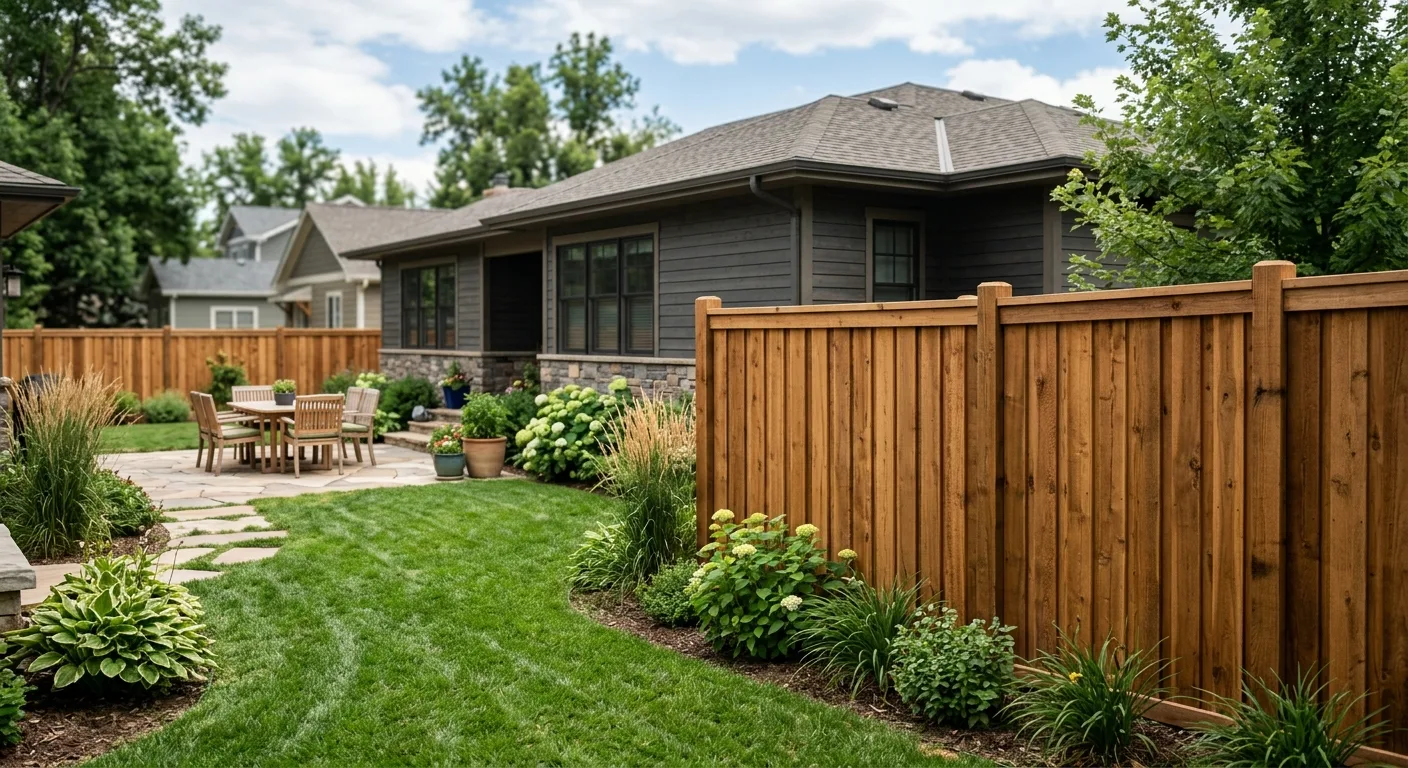
<p>Every "how to stain a wood fence" guide online was written for a climate that isn't yours. They tell you to wait four to six weeks for new wood to dry, brush on a coat, and re-do it every five to seven years. Follow that on the Front Range and your fence peels or grays before you've finished paying it off. Denver isn't a normal staining market. UV at 5,280 feet runs roughly 20 to 25 percent stronger than at sea level, we take 100+ freeze-thaw cycles a year, and the air is dry enough that new cedar reaches staining-ready moisture in two to three weeks, not six. Stain for those three forces and the coat holds. Stain by the generic calendar and you'll be stripping it back off in eighteen months.</p>
<p>I'm Julian Lopez, owner of J.A's Privacy and Perimeter. I've stained cedar, pine, and pressure-treated fences across Denver, Aurora, Lakewood, Thornton, Arvada, and Westminster for 15+ years, and here's the pattern I keep running into: eight out of ten failed stain jobs I get called to fix aren't product failures. They're prep failures. So this guide walks the job the way I actually do it, and it's honest about the one step DIYers skip that costs them the whole coat.</p>
<img src="https://ktunuekthpaqbvijarql.supabase.co/storage/v1/object/public/hero-images/997cde1b-f695-4adf-a43b-a034f0804cba/cedar-fence.jpg" alt="Freshly stained Western Red Cedar privacy fence holding warm color under Colorado sun" width="1200" height="800" loading="lazy" class="my-6 w-full rounded-lg" />
<h2>How to Stain a Wood Fence: The Real Steps</h2>
<p>Staining a fence in Colorado is five steps, and the order isn't negotiable. Clean it, brighten it, let it dry to a metered moisture number, apply a penetrating oil, then back-brush it into the grain. Most weekend jobs skip the brightener and guess at the drying, which is exactly where they go wrong. Here's each step and why it earns its place.</p>
- Clean with sodium percarbonate. Not just a power-wash. A percarbonate wood cleaner lifts the gray, dead surface fiber and the mildew that a pressure washer alone drives deeper. Skip this and you're sealing dead fiber to the wood, which is what peels first.
- Brighten with oxalic acid. The cleaner raises the wood's pH and darkens it; an oxalic-acid brightener neutralizes that and reopens the grain so oil can penetrate. This is the step DIY guides almost never mention, and it's the difference between stain sitting on top of the wood and stain soaking into it.
- Dry to a moisture-meter number, not a calendar date. More on this below, because it's the single most common reason a Colorado stain job fails.
- Apply a penetrating oil. Semi-transparent penetrating oil, worked in on a dry, mild day. Never a film-forming solid stain or deck paint on a fence here (I'll explain why in the FAQ).
- Back-brush it in. Whether you spray or roll, follow with a brush to drive the oil into the grain and even out lap marks. Oil that pools on the surface instead of penetrating is oil that flakes.
<aside class="my-6 rounded-md border border-border bg-card p-4 text-sm">Front Range fact: UV at Denver's 5,280 feet runs 20 to 25 percent stronger than at sea level, and it breaks down lignin in the top 0.1 mm of wood fiber. South and west-facing runs fade 30 to 50 percent faster than the north side of the same fence. Plan your re-coat around the sun-baked runs, not the shaded ones.</aside>
<h2>Best Time to Stain a Fence in Colorado</h2>
<p>The best window on the Front Range is late spring through early fall, on a stretch of dry days with daytime highs roughly between 50 and 90 degrees and no rain in the forecast for 24 to 48 hours after you finish. What you're really timing is moisture, not the month. New cedar in Denver's dry air hits staining-ready moisture content in two to three weeks, far faster than the four-to-six-week calendar rule every out-of-state guide repeats. Pressure-treated pine is the opposite: the treatment chemicals hold water, and I've metered new PT fences still sitting above 25 percent at six weeks.</p>
<blockquote class="my-6 border-l-4 border-accent pl-4 italic text-foreground/85">"The calendar isn't the right metric. The moisture meter is. I don't put oil on wood that hasn't dried to number."</blockquote>
<p>Two things to avoid: staining in direct afternoon sun on a hot picket, which flashes the oil off before it can penetrate, and staining late in the season when overnight lows drop the wood below the product's cure temperature. If you're chasing the color window before winter, aim for a mild morning start on the shaded side and work with the sun, not against it. For new cedar specifically, our cedar fence installation gets a stain within thirty days of the build once it meters dry, which is the tightest the color-protection window gets.</p>
<h2>Getting the Moisture Right Is the Whole Job</h2>
<p>Stain applied over wet wood doesn't bond. It floats on the moisture, dries unevenly, and starts peeling or flaking within a season. That's not the product failing. That's the wood being too wet, and it's the failure I see more than any other on Colorado DIY jobs. A cheap pin moisture meter costs less than a gallon of premium stain and settles the question in ten seconds.</p>
- Cedar: below 18 percent on a pin meter, below 15 percent on a pinless meter before any oil goes on.
- Pressure-treated pine: below 18 percent on a pin meter, and expect it to take weeks longer than cedar because the treatment saturates the wood.
- Older wood with a prior finish: meter at the post base and the picket midline. A base reading above 25 percent in August means ground-line moisture that has to be dealt with before you stain over it.
<aside class="my-6 rounded-md border border-border bg-card p-4 text-sm">When to call instead of DIY: If your fence is already cupping, the boards are cracking through, or the posts are soft and rotting at grade, staining over it won't save it and can hide the damage. That's a repair question, not a finish question. We handle it on our fence repair visits and tell you honestly which boards are past saving before anyone quotes a stain.</aside>
<h2>Which Stain Product Actually Holds Up Here</h2>
<p>Most guides say "use a quality stain" and never name one. I'll name what I actually carry and why, because the product matters as much as the prep at this altitude. All three below are penetrating oils, which fade gradually from inside the wood fiber instead of cracking and peeling off the surface the way film-forming coatings do under 100+ freeze-thaw cycles.</p>
- TWP 1500: my default for residential cedar. Deep-penetrating semi-transparent oil, color holds two to three years on south and west exposure. One Colorado note that trips up DIYers: the old TWP 100 formula isn't compliant with Colorado's air-quality rules, so TWP 1500 is the version you can legally buy and apply here.
- Armstrong-Clark: a drying-oil and non-drying-oil blend. The non-drying portion stays mobile in the wood, so future re-coats blend without lap marks. Premium price, premium result, best if you want the lowest-maintenance oil.
- Ready Seal: forgiving, no back-brushing strictly required after spray, best on pressure-treated pine and rougher wood where cedar-grade depth isn't the goal.
<p>If you'd rather not do the prep chemistry, the moisture metering, and the back-brushing yourself, that's the whole reason our professional fence staining in the Denver metro exists. Same products, done to number, with a year-one follow-up so the re-coat never sneaks up on you. Call <a href="tel:+17206096094">(720) 609-6094 and I'll walk your fence and name the exact product going on it.</p>
<h2>FAQ</h2>
<h3>How often should you re-stain a cedar fence in Colorado?</h3>
<p>Every two to three years for cedar on the Front Range, and lean toward every two years on the south and west-facing runs that take the most sun. That's shorter than the five-to-seven-year cadence you'll read on out-of-state guides, and the reason is our UV. At 5,280 feet, sunlight runs 20 to 25 percent stronger than at sea level and breaks down the lignin in the top layer of wood fiber, which is what fades a penetrating oil. The good news with penetrating oil is that re-coating is a maintenance coat, not a strip-and-redo: because the oil lives inside the wood rather than as a film on top, you clean, let it dry to a metered number, and apply a fresh coat. A film-forming solid stain, by contrast, cracks and peels under our freeze-thaw cycling and forces a full strip-down every time. Miss a cycle and your cedar grays out from UV oxidation, but it doesn't fail structurally, so you can catch it back up. Skip staining entirely and cedar still holds 15+ years of structural life if the posts are set right; you just lose the color in the first season.</p>
<h3>Oil-based or water-based stain for a fence in Colorado?</h3>
<p>For a fence on the Front Range, a penetrating oil-based stain is the right call, and it's what I use on nearly every job. Penetrating oils soak into the wood fiber and fade gradually, which is exactly what you want against 100+ freeze-thaw cycles a year, because there's no surface film to crack and peel at the wood-to-finish interface. Water-based film-forming products and solid stains sit on top of the wood, and that film is precisely where our freeze-thaw cycling attacks: it cracks at the interface, water gets under it, and you're back to a full strip-down instead of a simple maintenance coat. The three oils I carry, TWP 1500, Armstrong-Clark, and Ready Seal, are all penetrating oils chosen for Denver-altitude UV and freeze-thaw. The one time I'll apply a solid, film-forming stain is when an HOA mandates a specific solid color match, like HRCA's Highlands Ranch Fence Brown, and even then I make sure the homeowner understands the re-coat schedule will be shorter than it would be with a penetrating oil. Not sure what your fence needs or what your HOA allows? Call <a href="tel:+17206096094">(720) 609-6094 or request a free on-site quote and I'll read the wood, meter the moisture, and give you a straight answer in person.</p>