Vinyl vs Wrought Iron Fence for Colorado Front Yards
· Buying Guide
Vinyl or wrought iron for a Denver front yard? The real decision is the front-yard sight-line rule, UV, and 20 years of upkeep, not taste.
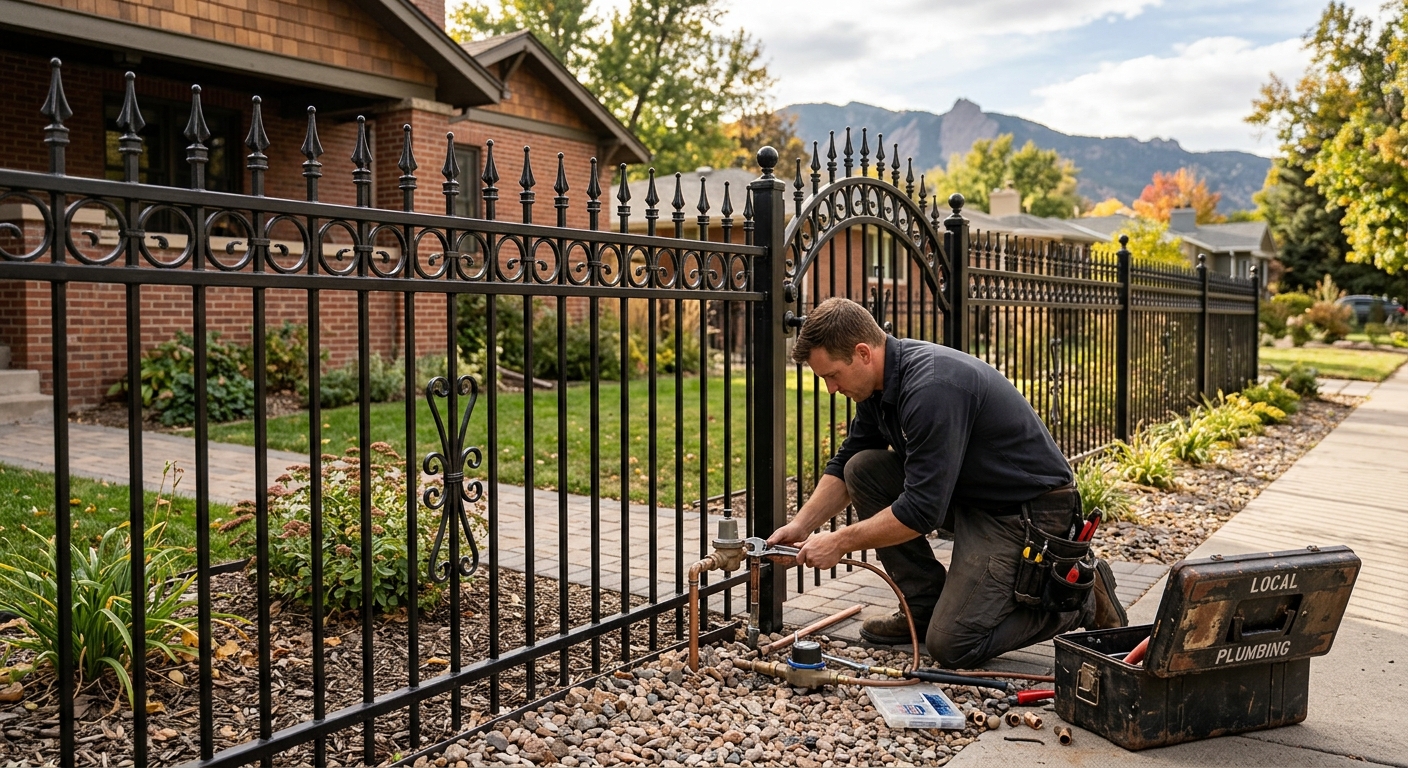
Most vinyl-versus-wrought-iron comparisons treat this as a taste question: do you like the clean modern panel or the classic ornamental look? On a Denver front yard, that's the wrong first question. The rule that actually decides it is Denver's front-yard fence code, which caps how solid a fence can be in the front setback. Get that rule wrong and it doesn't matter which material you loved on Pinterest, because an inspector can make you take it down. We install both across Denver, Aurora, Lakewood, Thornton, Arvada, and Westminster, and this is the comparison the way we walk it on an estimate visit, front-yard rule first.
- The rule that decides it: in Denver, any front-yard fence over 4 feet has to stay less than 50 percent solid across any 4-foot section. Open-picket wrought iron passes that easily; a solid vinyl privacy panel does not pass it at height.
We're J.A's Privacy and Perimeter, owned by Julian Lopez. We've set spear-top iron against the older brick homes around Capitol Hill and Cherry Creek, and we've racked aluminum-reinforced vinyl down the grade changes near Green Mountain and Bear Creek in Lakewood. We don't have a favorite material to push. We have a front-yard code and a climate to build for, and once you know how those two forces cut, the choice usually makes itself.
Vinyl vs Wrought Iron Fence: What Actually Decides It
The honest split is this. Wrought iron is an open, see-through ornamental fence: it defines the yard, adds security, and passes Denver's front-yard openness rule easily. Vinyl is a solid, low-maintenance privacy panel: it screens the yard, but a solid vinyl panel over 4 feet is exactly what the front-yard code restricts. So the two materials don't really compete for the same job on a front yard. One is for definition and curb appeal you can see through; the other is for privacy you can't.
The front-yard openness rule that drives the choice
Here's the rule that drives it. In Denver, any front-yard fence over 4 feet has to stay less than 50 percent solid across any 4-foot section, under Denver Zoning Code Article 10, Division 10.5. Open-picket wrought iron sails through that test, which is why iron works so well on a Denver front yard where a solid 6-foot privacy fence simply isn't allowed. A solid vinyl privacy panel does not pass it at height. That single code line is why most of our front-yard iron goes in the front and most of our vinyl privacy goes in the back.
- Choose wrought iron fence installation when the front yard needs definition, security, and a look that passes the openness rule at full height.
- Choose vinyl and composite fence installation when the goal is privacy screening, usually in the rear and side yards where the 6-foot allowance applies.
Which Fence Lasts Longer in Colorado, Vinyl or Iron?
Both outlast a wood fence on the Front Range, but they age in opposite directions, and the honest answer depends on how you weigh finish maintenance against structural life. Iron is the stronger material and, set to frost depth, it will physically outlast almost anything, but its powder-coat finish needs attention. Quality aluminum-reinforced vinyl is essentially maintenance-free, but it's a lighter material than iron. Neither one rots, grays, or needs the re-stain a cedar fence demands every two to three years.
Wrought iron: strongest material, finish needs a schedule
Wrought iron's weak point is rust, not strength. In Colorado's dry air that's a slow process compared to a coastal market, but it's real. Expect to touch up chips and scratches every few years and apply a rust-inhibiting coat every 5 to 10 years to keep the finish sealed. Do that, and an iron fence is genuinely built to outlast the house it borders. Skip it and let a breached finish sit, and rust starts at the scratch and spreads from there.
Vinyl: near-zero maintenance, but only in the reinforced grade
Vinyl's durability question isn't rot, it's cold and UV, and it comes down entirely to grade. Big-box hollow vinyl yellows, turns brittle, and cracks at the post channels after a few high-altitude summers. The lines we install are built differently: CertainTeed Bufftech, ActiveYards, and Ply Gem run aluminum-reinforced internal channels against sag, UV inhibitors formulated for altitude, and impact modifiers that keep panels flexible down to 30 degrees below zero instead of shattering on a hail strike. That grade gap is the whole ballgame. Premium lines also carry lifetime warranty options, and that's why we won't quote the cheap product that fails in year four.
- Wrought iron: strongest material, longest structural life, finish upkeep every few years plus a coat every 5 to 10.
- Aluminum-reinforced vinyl: near-zero maintenance, no finish schedule, cold and UV resistance that depends entirely on choosing the reinforced grade.
Low Maintenance Fence Colorado: Where Vinyl Wins and Where It Doesn't
If your single biggest priority is a fence you install once and stop thinking about, aluminum-reinforced vinyl is the lowest-maintenance option we build. No staining, no rust coat, no board replacement, no graying. The premium lines flex through the swing from a 90-degree July afternoon to a hard January freeze without cracking, so the Front Range climate isn't what fails them. Shallow footings are, which is why we set posts to frost depth regardless of the panel on top.
Iron is low-maintenance, not no-maintenance
Iron isn't high-maintenance, but it's not zero-maintenance either, and anyone who tells you an iron fence is truly hands-off is selling. The powder coat is durable, the rust process here is slow, but the honest framing is a finish check every few years and a rust-inhibiting coat on a 5-to-10-year cadence. That's far less work than staining cedar, and it buys you the strongest fence on the lot. It's a maintenance trade you make on purpose when you want strength and ornamental looks, not one you get surprised by.
- Absolute lowest maintenance, privacy screening: aluminum-reinforced vinyl.
- Very low maintenance, open ornamental strength: powder-coated wrought iron with a periodic finish coat.
- Either way, the footing is what determines survival: posts augered to 36 to 42 inches in Front Range clay, set in a gravel-and-concrete sandwich for drainage.
Front Range Climate and Footings: The Part Both Materials Share
Whatever you pick on top, the ground underneath is the same problem. Denver's expansive bentonite clay in neighborhoods like Wash Park and Capitol Hill swells with meltwater and shrinks as it dries, and the metro takes roughly 150 freeze-thaw cycles a year. A post set to the 24-inch depth big-box kits assume will heave out of that soil within a few winters, and a heaved post tilts a vinyl panel and an iron run alike. This is the failure we get called to fix more than any other, and it has nothing to do with the material choice.
- The part that outranks the material: a post set to the 24-inch depth big-box kits assume heaves out of Front Range clay within a few winters and tilts a vinyl panel and an iron run alike. We set posts 36 to 42 inches deep on a gravel-and-concrete footing, whatever goes on top.
We set posts a minimum of 36 inches deep, and 42 in heavy clay, at or below Denver's roughly 36-inch frost line, with a gravel base under the footing so meltwater drains away instead of freezing against the post. Iron is heavier and less forgiving than vinyl, so on a spear-top run in Capitol Hill clay the depth and drainage matter even more. On sloped lots near Park Hill or the western neighborhoods, iron gets racked or step-cut so the top rail reads as a clean line, and vinyl panels rack up to 7 degrees per section to follow the grade. Standard builds in both materials are rated to 70 mph wind. If you'd rather talk it through than read it, tell us about your lot on our contact page and Julian will read the soil in person.
HOA and Permits: The Clock Most People Forget
For a lot of Denver-metro front yards, the material rule isn't just the city code, it's the HOA. Neighborhoods like Highlands, Lowry, Stapleton, and Cherry Creek run an Architectural Review Committee that approves style, height, color, and material before you build, and that review runs on its own clock separate from any city permit. Most Denver-area ACCs approve gloss or satin black as the default ornamental iron finish and will kick back a bronze or custom color unless it matches the community's approved list. Vinyl gets the same treatment on panel color and height.
We handle the ARC package and permit in-house
We handle the ARC package and any required permit in-house, so you don't chase paperwork. For iron over 6 feet, the permit runs through Denver Community Planning and Development, roughly 5 to 7 business days on the e-permit portal. We keep current spec sheets for 30+ Aurora HOAs so the design we submit already matches your community's approved options rather than getting kicked back for a revision that resets the clock. Whether you land on ornamental iron or aluminum-reinforced vinyl, the submittal is handled before the crew is ever scheduled.
When Neither One Is the Right Call
Here's the line most contractors won't put in an article. If your real goal is full backyard privacy, wrought iron is the wrong spend, full stop. It's an open fence by design, and no amount of budget makes an ornamental iron panel private. That's a vinyl, cedar, or composite privacy conversation, not an iron one. And if you want that privacy in a street-facing front yard at 6 feet, understand up front that Denver's front-yard code likely won't allow a solid panel that tall, regardless of material, so the honest answer may be iron in front and privacy in back.
The reverse mistake: forcing vinyl into the iron job
The reverse is also true. If you want the open, defined, drive-up look of ornamental iron on a front yard, don't let anyone talk you into a solid vinyl panel to save money, because it won't pass the front-yard openness rule at height and it isn't the look you were after anyway. The cheapest fence is the one that's built for the job the first time. We install both materials, and on a free on-site estimate we'll tell you which one actually fits your lot, your HOA, and the front-yard rule before anyone quotes a number. Call 720-609-6094 Monday through Friday, 7 a.m. to 6 p.m., or request a quote through our contact page.
Frequently Asked Questions
Does a wrought iron fence need HOA approval in Colorado?
In most Denver-metro HOA neighborhoods, yes, and it's a separate approval from any city permit. An HOA Architectural Review Committee reviews the fence style, height, color, and material against the community's covenants before construction, and that clock runs independently of the city. Neighborhoods like Highlands, Lowry, Stapleton, and Cherry Creek each run their own committee, and most Denver-area ACCs approve gloss or satin black as the default ornamental iron finish while kicking back bronze, hammered, or custom colors unless they match the approved materials list. We prepare and submit the ARC package in-house, matched to your community's specs, so it's less likely to come back for a revision that resets the review. The single best move to protect your timeline is getting the HOA package moving before the city permit, not after. We verify what governs your exact parcel during the free on-site estimate and tell you clearly which approvals apply.
Does vinyl fence hold up to Colorado wind and sun?
Quality vinyl does; cheap vinyl does not, and the difference is entirely the grade. Big-box hollow vinyl lacks the additives that matter at altitude, so it yellows and turns brittle under 5,280-foot UV, then cracks at the post channels and can shatter on a hail strike. The aluminum-reinforced lines we install, CertainTeed Bufftech, ActiveYards, and Ply Gem, use internal aluminum channels against sag, UV inhibitors formulated for high-altitude exposure, and impact modifiers that keep panels flexible down to 30 degrees below zero rather than turning brittle in a hard freeze. Standard builds are rated to 70 mph wind, which is the exposure we design every fence to. The catch that has nothing to do with the panel is the footing: a post set shallow heaves in Front Range clay and tilts the fence regardless of grade, which is why we set posts 36 to 42 inches deep in a gravel-and-concrete sandwich. Pick the reinforced grade and set it to frost depth, and Colorado wind and sun aren't what fails a vinyl fence.
Ready to decide between iron and vinyl for your front yard? Julian measures every job in person and gives you a straight material recommendation, checks the front-yard code and your HOA, and delivers a line-item quote before any work is scheduled. Call 720-609-6094 Monday through Friday, 7 a.m. to 6 p.m., or request a free, no-obligation estimate through our <a href="/contact">contact page</a>.