Who Pays for a Shared or HOA Fence Repair in Colorado?
· Local Guide
Who's responsible for a shared or HOA fence repair in Colorado? How the property line, your CC&Rs, ARC approval, and homeowner's insurance actually decide it.
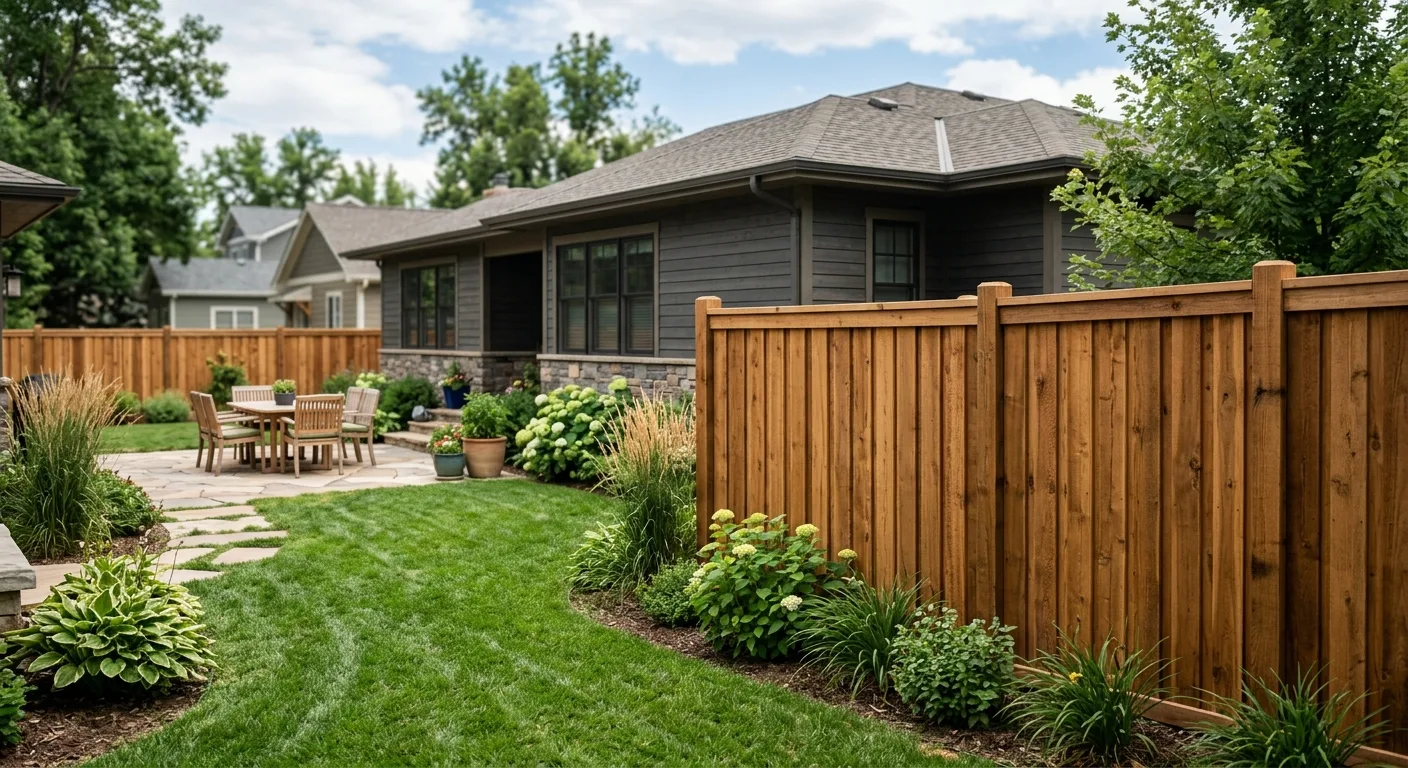
<p>A fence goes down on the line between two yards, or a section owned by the HOA cracks after a hail cell, and the first question is never about lumber. It's "who pays for this?" We get that call across the Denver metro every spring, and the honest answer is that the material is the easy part. The responsibility is where people get stuck. After 15+ years repairing fences across Denver, Aurora, Lakewood, Thornton, Arvada, and Westminster, we've watched more repairs stall over a neighbor disagreement or an HOA question than over the actual damage.</p>
<p>We're J.A's Privacy and Perimeter, owned by Julian Lopez. This guide walks the responsibility question the way we walk it on a site visit, in the order it actually matters: whose fence is it, what do your CC&Rs say, does an Architectural Review Committee have to approve the fix, and will homeowner's insurance carry any of it. One hard rule up front: we're a fence contractor, not your attorney or your insurance adjuster. What follows is general Front Range guidance, not legal advice, and your specific answer lives in your recorded plat, your HOA covenants, and your policy. We'll tell you where to look. We won't invent a statute for your address.</p>
<blockquote class="my-6 border-l-4 border-primary pl-4 italic text-foreground/85">"More repairs stall over a neighbor conversation or an HOA question than over the damage itself. Sort the responsibility first, and the fence goes up fast."</blockquote>
<h2>Who Is Responsible for a Shared Fence Repair in Colorado?</h2>
<p>Generally, the fence belongs to whoever owns the land it sits on, and that's decided by the property line on your recorded plat, not by which side the "good" face points toward. A fence set entirely on your side of the line is usually your responsibility alone. A fence that straddles the boundary is commonly treated as a shared, or "division," fence that both neighbors benefit from and, in most cases, both are expected to help maintain. Colorado doesn't run on a single statewide fence-cost-split rule the way a few states do, so absent a written agreement, a shared boundary fence is typically handled by mutual cost-sharing worked out between the two owners.</p>
<aside class="my-6 rounded-md border border-border bg-card p-4 text-sm">The step that settles most disputes: pull your Improvement Location Certificate or plat before you argue over the fence. It shows exactly where the boundary sits and which side of it the posts are on. Aurora commonly asks for a recent ILC on fence permits anyway, so many homeowners already have one from closing.</aside>
<p>When the damage is on a true boundary fence, the practical path is a conversation before a contractor, not after. Agree on the scope, agree on the split, and get it in writing, even a short signed note, so nobody relitigates the number when the invoice lands. That's exactly why we build an itemized, line-by-line quote you can hand to a neighbor: it turns "the fence needs work" into a specific dollar figure two households can actually agree on. If you're staring at a leaning boundary section right now, our professional HOA and shared-fence repair across the Front Range starts by finding the real cause and writing it up in plain numbers.</p>
<h2>Does the HOA Pay for Fence Repair in Colorado?</h2>
<p>It depends entirely on who owns the fence, and your CC&Rs spell that out. In most Colorado HOAs the split runs one of two ways: perimeter and common-area fencing that the association installed and owns is generally the HOA's responsibility to maintain and repair out of association dues, while a fence inside your own lot lines is generally yours, even when the HOA dictates its style, height, and color. The trap is the fence that looks communal but isn't. A "shared" screen fence along a greenbelt might be on your parcel, maintained by you, while the fence 40 feet away bordering the open space is the association's. The plat and the covenants, read together, are the only reliable way to tell them apart.</p>
- HOA-owned (association pays): perimeter fencing, common-area and amenity enclosures, and entry-monument fencing the HOA installed and holds title to.
- Homeowner-owned (you pay): the fence around your own lot, even when the HOA controls its appearance through the covenants.
- The gray zone (read the CC&Rs): greenbelt-facing and lot-line fences in newer master-planned communities, where ownership isn't obvious from the yard.
<p>This matters most in the newer master-planned neighborhoods where fencing density is highest, places like Todd Creek and North Creek in Thornton, the east-of-E-470 subdivisions in Aurora, and Bradburn and the Promenade in Westminster, where covenants often require coordinated panel height and color across adjoining properties. Before you pay for anything, call your management company and ask a single question: does the association own and maintain this specific fence, or do I? Get the answer in writing. We'd rather you find out the HOA owes the repair than have us bill you for a fence that wasn't yours to fix.</p>
<h2>Does Homeowners Insurance Cover Fence Repair in Colorado?</h2>
<p>Generally, yes, when the damage comes from a covered peril like wind, hail, or a fallen tree, a standard Colorado homeowner's policy treats a fence as a detached structure ("other structures," Coverage B on most policies) and can pay to repair or replace it, subject to your deductible and coverage limits. That's meaningful on the Front Range, where spring hail and summer microbursts are the two events that flatten most of the fences we repair. What insurance generally will not cover is wear-and-tear, rot, or a post that heaved because it was set shallow years ago. Damage from a sudden storm is a claim; damage from age and neglect is maintenance, and adjusters draw that line hard.</p>
<blockquote class="my-6 border-l-4 border-accent pl-4 italic text-foreground/85">"A hail or microburst claim gets paid on evidence, not on your word. Photograph the damage before anyone touches it, because the adjuster needs to see it and so do we."</blockquote>
<p>The claim gets paid on documentation, which is the part homeowners most often get wrong. Adjusters want dated photos, a clear cause of loss, and an itemized repair scope, and a vague estimate gets a claim underpaid or denied. On storm calls we prepare the itemized damage report the way Colorado adjusters expect it, so the number your carrier sees matches the number the repair actually costs. We cover the full documentation workflow in our companion guide on filing a Colorado fence hail-damage insurance claim, and for Denver homeowners specifically, our Denver fence repair with adjuster-ready damage reports builds that packet as part of the repair. One note on shared fences: if a boundary fence is damaged, each owner typically files with their own carrier for their share, so trading photos with your neighbor early keeps both claims moving.</p>
<aside class="my-6 rounded-md border border-border bg-card p-4 text-sm">Before you file: weigh the repair cost against your deductible. If a two-post reset comes in near or under your deductible, a claim isn't worth the record. If a microburst laid a whole run flat, it almost certainly is. We'll give you the honest repair number first so you can decide, and if it's a small fix you can skip the claim on, we'll tell you that too.</aside>
<h2>When You Don't Need to File, or Fight, at All</h2>
<p>Here's the line most contractors won't put in writing. Not every downed fence is a claim, a dispute, or even a full repair. If a single picket cracked or one rail worked loose, that's a Saturday-afternoon fix, not an insurance event and not a reason to call your neighbor into a negotiation. If your posts are set in stable ground and have held plumb for years, don't let anyone talk a whole boundary fence into a teardown because two sections took hail. And if you're replacing a fence on the exact same footprint, height, and material, many HOAs have a like-for-like provision that skips a fresh ARC submission entirely, so ask before you pay anyone to prepare a package. The cheapest repair is the one you didn't need to make into a bigger project.</p>
<p>When the fix is genuine and shared, though, the sequence that keeps it moving is simple: confirm the property line, read the CC&Rs to see who owns it, get any HOA and insurance approvals started early, and only then schedule the crew. Julian walks every job in person, finds the real cause before quoting, and writes it up itemized so a neighbor, an HOA board, or an adjuster can all read the same number. Call <a href="tel:+17206096094">(720) 609-6094 Monday through Friday, 7 a.m. to 6 p.m., or request a free on-site assessment and we'll sort out what's yours, what's the association's, and what the storm owes you.</p>
Frequently Asked Questions
Who approves an HOA fence repair through architectural review?
An HOA Architectural Review Committee (ARC, sometimes called the ACC) approves fence changes in most Colorado HOA neighborhoods, and it's a separate approval from any city permit. For a like-for-like repair, same footprint, height, material, and color, many associations don't require a fresh submission at all, so ask your management company first before assuming you need one. Where an ARC review does apply, the committee checks style, height, color, material, and sometimes picket spacing against the community's covenants, and that clock runs independently of the city. Neighborhoods like Highlands, Lowry, Stapleton, Todd Creek, and Bradburn each run their own committee with their own approved palette. We prepare and submit the ARC package in-house, matched to your community's specs, so a repair that does need sign-off doesn't come back for a revision that resets the review. The best move to protect your timeline is confirming whether the HOA owns the fence, and whether review is even required, before scheduling anything.
How do you split a shared fence repair cost with a neighbor?
Start with the property line, then the numbers, then a written note. First confirm whose land the fence sits on using your plat or Improvement Location Certificate, because a fence entirely on one side is usually that owner's responsibility, while a fence straddling the boundary is commonly a shared "division" fence both neighbors help maintain. For a true boundary fence with no prior written agreement, the practical Colorado approach is a mutual cost-split worked out between the two owners, most often 50/50 on a like-benefit repair, though the split can shift if the damage clearly came from one side. Get an itemized, line-by-line quote so both households are agreeing to a specific dollar figure rather than a vague "the fence needs work," and put the agreed split in a short signed note before the crew starts so nobody relitigates the number when the invoice lands. If storm damage is involved, each owner typically files with their own homeowner's insurer for their share. We build the itemized quote specifically so it's easy to hand across the fence and split cleanly. Call 720-609-6094 or request a free on-site assessment through our contact page and we'll write it up in numbers two neighbors can actually agree on.