Fence Repair vs Replace in Colorado: When a Repair Holds
· Buying Guide
Repair or replace your Front Range fence? The honest call comes down to post integrity at grade, not the boards you can see. Here's the threshold by material.
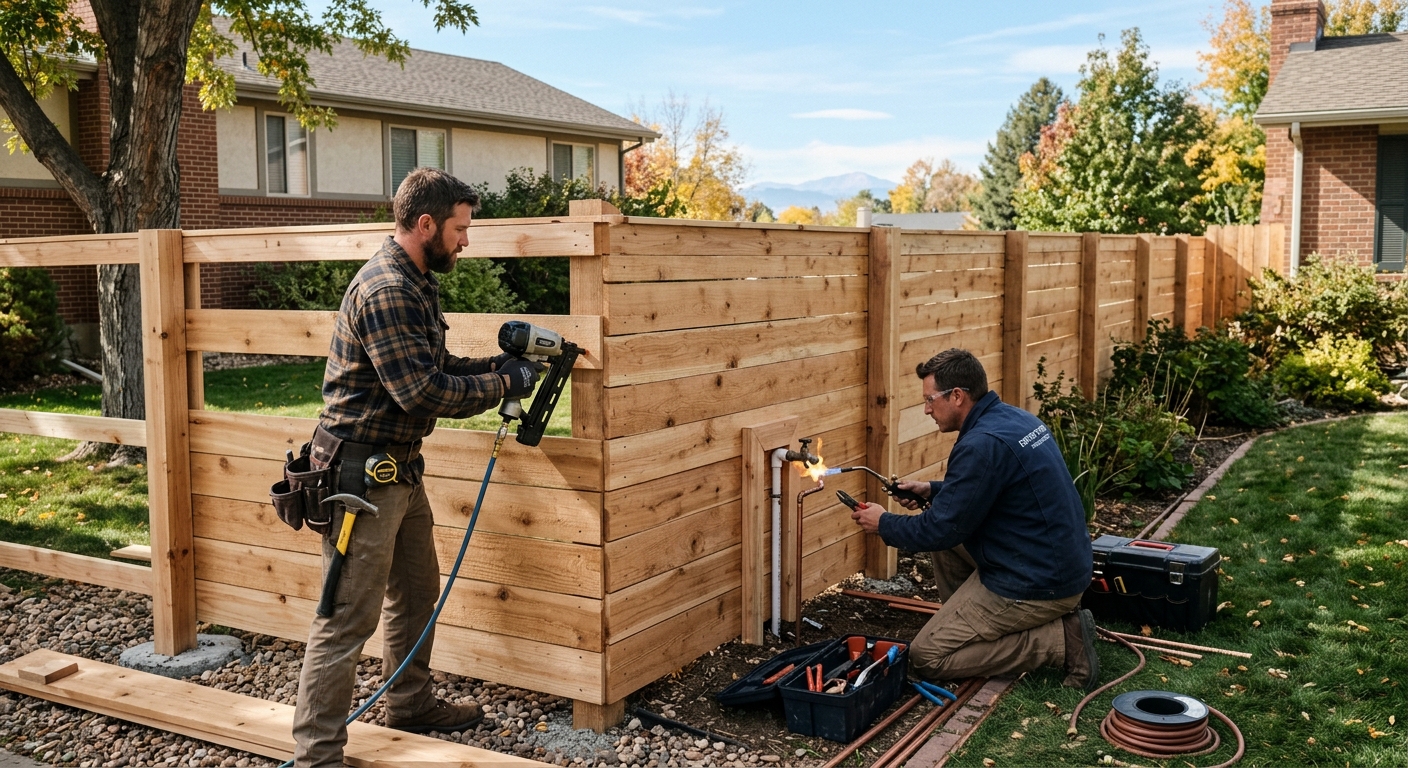
<p>Here's the mistake we watch homeowners make every season on the Front Range: they judge a fence by the boards they can see. Cracked pickets, a blown-out panel, a run that's leaning. Those are the loud problems, and they're almost never the ones that decide repair versus replace. The quiet problem is what's happening to the posts at grade, three inches below the dirt, where Denver's clay holds meltwater against the wood and freeze-thaw works it loose one cycle at a time. After fifteen-plus years resetting posts across the metro, the rule we've landed on is simple: a fence lives or dies at the footing, not the fence face. Get that one question answered honestly and the repair-versus-replace call answers itself.</p>
<p>We're J.A's Privacy and Perimeter, owned by Julian Lopez. We build new fences and we repair them across Denver, Aurora, Lakewood, Thornton, Arvada, and Westminster, which means we have no reason to push you toward whichever one bills more. When a repair holds, we tell you to repair. When it's throwing money at a fence that's going to fail two more times before winter, we tell you that too. This is the same decision framework we walk through on an estimate visit, keyed to the material you actually have and the damage patterns the Front Range actually throws.</p>
<h2>Should I Repair or Replace My Fence?</h2>
<p>Repair when the damage affects less than about 30% of the run, the posts are structurally sound at grade, and the material can be matched without a visible seam. Replace when more than 40% of the fence is compromised, multiple posts have rotted or heaved, or the product line is discontinued and can't be color-matched. The honest gray zone is 30 to 40%, and that's where we check post integrity at grade before quoting, because a leaning panel over a sound post is a two-hour fix while the same lean over a rotted post is the first domino in a full replacement.</p>
<aside class="my-6 rounded-md border border-border bg-card p-4 text-sm">Front Range fact: The Denver metro averages roughly 155 freeze-thaw cycles a year, and the bentonite clay through Wash Park, Capitol Hill, and western Aurora heaves shallow-set posts every spring. That's why post condition, not board condition, is the number that decides the call here.</aside>
<p>The single test that settles most of these calls is the ground-line probe. We push a screwdriver into the post right at the dirt line. If it sinks into soft, punky wood, that post is rotting from the inside and no amount of new pickets will save the section. If it hits solid wood, the post has years left and the damage above it is genuinely repairable. Julian does this check on every post before quoting, because it's the difference between an honest repair and a repair that calls us back next spring. If your fence is leaning right now, our guide on how we re-set a leaning post in Colorado clay walks through why footing depth, not the boards, is almost always the real cause.</p>
<h2>How Many Fence Posts Can Be Replaced Before You Replace the Whole Fence?</h2>
<p>As a working threshold, once more than about a third of the posts in a run need resetting or replacing, you're usually better off replacing the fence outright. Resetting a single bad post without disturbing the good rails and panels is efficient and cost-effective. Resetting eight of them across a 100-foot run means paying repair labor at every post plus patching the sections you disturbed, and you still have an aging fence when you're done. The math flips somewhere between a third and a half of the posts, and that's the number we count first.</p>
<blockquote class="my-6 border-l-4 border-primary pl-4 italic text-foreground/85">"Two bad posts in a healthy fence is a repair. Eight bad posts in a fifteen-year-old fence is a replacement wearing a repair costume, and it's my job to tell you which one you've got."</blockquote>
<p>Why posts and not boards? Because pickets, rails, and even whole panels are consumable. We swap them, match the profile and the weathered color, and the fence reads clean from the street. Posts are the structure. A post reset means pulling the old post, clearing the footing channel, and setting new at 36 to 42 inches in full concrete to get below the frost line, the same standard we build new fences to. When enough posts need that treatment, you're rebuilding the fence one hole at a time at repair prices, and a clean replacement on fresh footings costs less over the next decade. This is exactly the count we run on a Front Range fence repair walk-through before anyone commits to a number.</p>
<h2>Repair or Replace by Material: Cedar, Vinyl, and Chain Link</h2>
<p>The threshold shifts with what your fence is made of, because each material fails differently in Colorado. Here's how we read each one:</p>
- Cedar. The failure point is the post at grade, not the pickets. Cedar boards are cheap and easy to swap, so a cedar fence under about 10 years old with sound posts is almost always worth repairing, even if half the pickets look rough. Past 15 years with posts rotting across the run, cedar is usually past the point where repair makes financial sense. Check for rot at the ground line before anything else.
- Vinyl. The repair-or-replace call hinges on whether the exact product line is still made. Premium aluminum-reinforced vinyl from CertainTeed Bufftech, ActiveYards, or Ply Gem can be section-matched for years. Cheap big-box vinyl that cracked in a hail cell is often discontinued, which means a visible mismatched patch, and a mismatch that reads from the street pushes the honest call toward replacement.
- Chain link. The most repair-friendly material we work with. Galvanized chain link runs 20-plus years, and a bent top rail, a stretched section, or a sagging gate is almost always a targeted fix rather than a teardown. Chain link rarely earns a full replacement unless the line posts themselves have rusted through at the base or you're changing the fence's purpose entirely.
<aside class="my-6 rounded-md border border-border bg-card p-4 text-sm">The discontinued-vinyl trap: Cheap hollow vinyl from a decade ago is frequently out of production. If a hail cell cracked three panels of a line nobody makes anymore, the "repair" is a patch that never matches, and that's often the moment replacement becomes the smarter money even when only 20% of the fence is damaged.</aside>
<h2>The Front Range Damage Patterns That Change the Call</h2>
<p>A repair-versus-replace framework written for a mild climate misreads Colorado fences, because the damage here comes from three specific events, and each one points the decision a different direction.</p>
<h3>Post heave in clay</h3>
<p>The most common failure we see, and the most misdiagnosed. A post set shallow or dry-packed in the bentonite clay through Wash Park, Capitol Hill, or western Aurora rides the freeze-thaw cycle up and down every spring until the whole section tilts. Homeowners see the lean and want the panel straightened. But if the footing never reached below the roughly 36-inch frost line, straightening it just resets the clock on the same failure. This is a repair, and a good one, but only if the reset goes to frost depth with a gravel drainage base. Otherwise you're paying twice.</p>
<h3>Microburst rail failure</h3>
<p>A summer microburst rolling off the foothills can hit 70-plus mph in a localized cell, and a solid 6-foot privacy panel acts like a sail in that load. What fails is usually the rails and the panel connections rather than the whole structure, so a microburst that flattened one run over sound posts is often a clean repair. The exception is the foothills. A microburst off Green Mountain can lay an entire run flat at once, and those jobs skew toward replacement. We run a dedicated fence repair in Lakewood, CO with post-storm triage built in for exactly that reason.</p>
<h3>Hail on cheap vinyl</h3>
<p>Golf-ball hail is a repair on cedar, which just needs cracked boards swapped, and often a total loss on cheap vinyl, which shatters at stress points instead of flexing. Quality vinyl with impact modifiers flexes down to 30 below zero and shrugs off most hail. Thin-walled big-box vinyl cracks around the post channels in a single season, and because those lines are often discontinued, a hail-struck cheap vinyl fence frequently crosses into replacement even when the damage looks contained. If it was insurance-related, we prepare the itemized documentation Colorado adjusters expect through our storm and hail fence repair in Aurora and across the metro.</p>
<h3>When repair is the wrong call, and we'll say so</h3>
<p>Here's the line most contractors won't put in writing. Don't pay us to repair a cedar fence that's fifteen years old with soft posts across most of the run, even though piecing it back together looks cheaper this month. You'll be back inside two seasons, and the second and third repairs erase whatever the first one saved. Don't repair a cheap vinyl fence whose product line is dead and can't be matched, because the patch will read from the street and you'll hate it. And if your fence is a genuine like-for-like replacement on the same footprint, ask your HOA before you pay anyone to prepare an Architectural Review package, because many communities skip the fresh submission for like-for-like. We'd rather tell you the repair isn't worth it than take money for one that fails.</p>
<h2>The Decision, One More Time</h2>
<p>Strip away the boards and it comes down to three questions we answer at the walk-through. What percent of the run is actually compromised, under 30% leans toward repair and over 40% toward replacement. What's the post condition at grade, sound posts save a fence and rotted posts sink it regardless of how the pickets look. And can the material be matched, cedar and premium vinyl usually can while discontinued cheap vinyl usually can't. Run those three and the answer is rarely ambiguous.</p>
<p>For a sense of how much runway each material has before this call even comes up, our guide on how long each material lasts at Denver elevation lays out the timelines. And when the damage is inside the city proper, our Denver residential fence repair page covers the clay soils and housing stock in more detail. Either way, we run the count before we quote, ready when you are, call <a href="tel:+17206096094">(720) 609-6094 and we'll walk the fence with you first.</p>
Frequently Asked Questions
Is it worth repairing an old wood fence in Colorado?
It depends almost entirely on the posts, not the boards. A cedar fence under about 10 years old with posts that are still solid at grade is usually worth repairing, because pickets and rails are cheap to swap and easy to color-match, and a sound post has years of life left. Once a wood fence passes 15 years and the posts are rotting at the ground line across most of the run, repair stops making financial sense, you'll be back within a season or two and the follow-up repairs erase what the first one saved. The single test we use is the ground-line probe: push a screwdriver into the post right at the dirt line, and if it sinks into soft, punky wood, that post is failing from the inside no matter how good the fence looks above grade. On the Front Range, Denver's clay holds meltwater against the post and freeze-thaw cycling, roughly 155 cycles a year, works shallow-set posts loose faster than the boards ever wear out. We check post integrity at grade before quoting so an old wood fence gets an honest repair-or-replace call rather than a repair that becomes a surprise replacement halfway through.
How many fence posts can be replaced before you should replace the whole fence?
As a working threshold, once more than about a third of the posts in a run need resetting or replacing, you're usually better off replacing the fence outright. Resetting one or two bad posts without touching the good rails and panels is efficient and keeps costs down. But resetting a third or more of the posts means paying repair labor at every hole plus patching the sections you disturb, and you still end up with an aging fence. The math flips somewhere between a third and a half of the posts, which is why we count posts first, before we look at the pickets. Posts are the structure and boards are consumable, so a fence with sound posts and rough boards is a repair, while a fence with rotted or heaved posts across the run is a replacement even if the boards look fine. On a proper reset we pull the old post and set new at 36 to 42 inches in full concrete below the frost line, the same standard we build new fences to, and when enough posts need that treatment you're rebuilding the fence one hole at a time at repair prices.
Ready for an honest repair-or-replace call on your fence? Julian walks every job in person, probes the posts at grade, and counts what actually needs fixing before quoting a number. Call <a href="tel:+17206096094">(720) 609-6094</a> Monday through Friday, 7 a.m. to 6 p.m., or <a href="/contact">request a free on-site assessment</a> and we'll tell you straight whether a repair holds or you're throwing money at a fence that needs replacing.